DMARC monitoring for every domain you manage.
dotMARC is a self-hosted DMARC aggregate report analyzer. Point every client domain at one mailbox, and see authentication posture across all of them from a single dashboard.
_dmarc.aurora-retail.example TXT
  v=DMARC1; p=quarantine;
  rua=mailto:[email protected]_dmarc.brightline-legal.example TXT
  v=DMARC1; p=none;
  rua=mailto:[email protected]_dmarc.cobalt-freight.example TXT
  v=DMARC1; p=reject;
  rua=mailto:[email protected]
Each client publishes one record. Every report lands in the same mailbox.
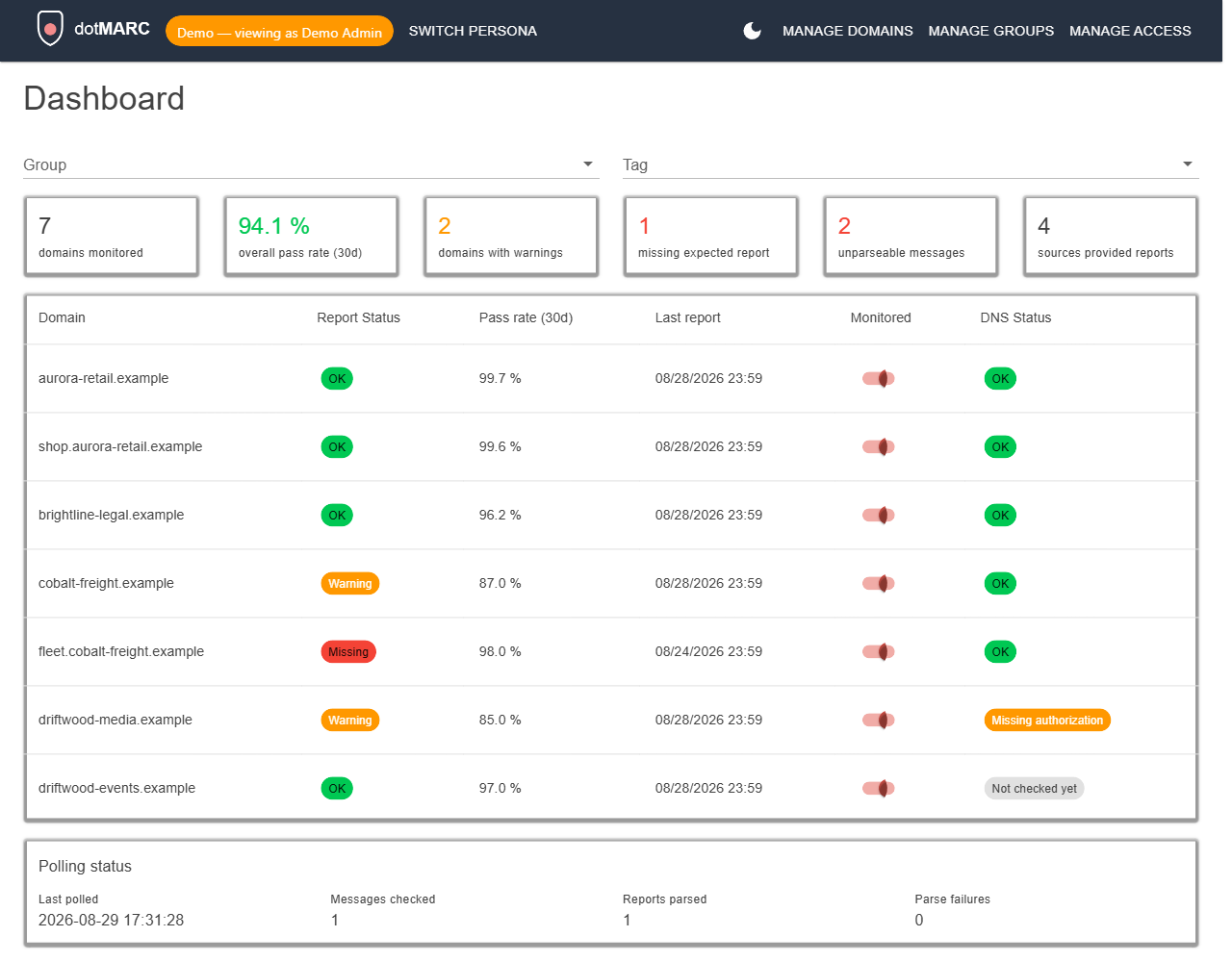
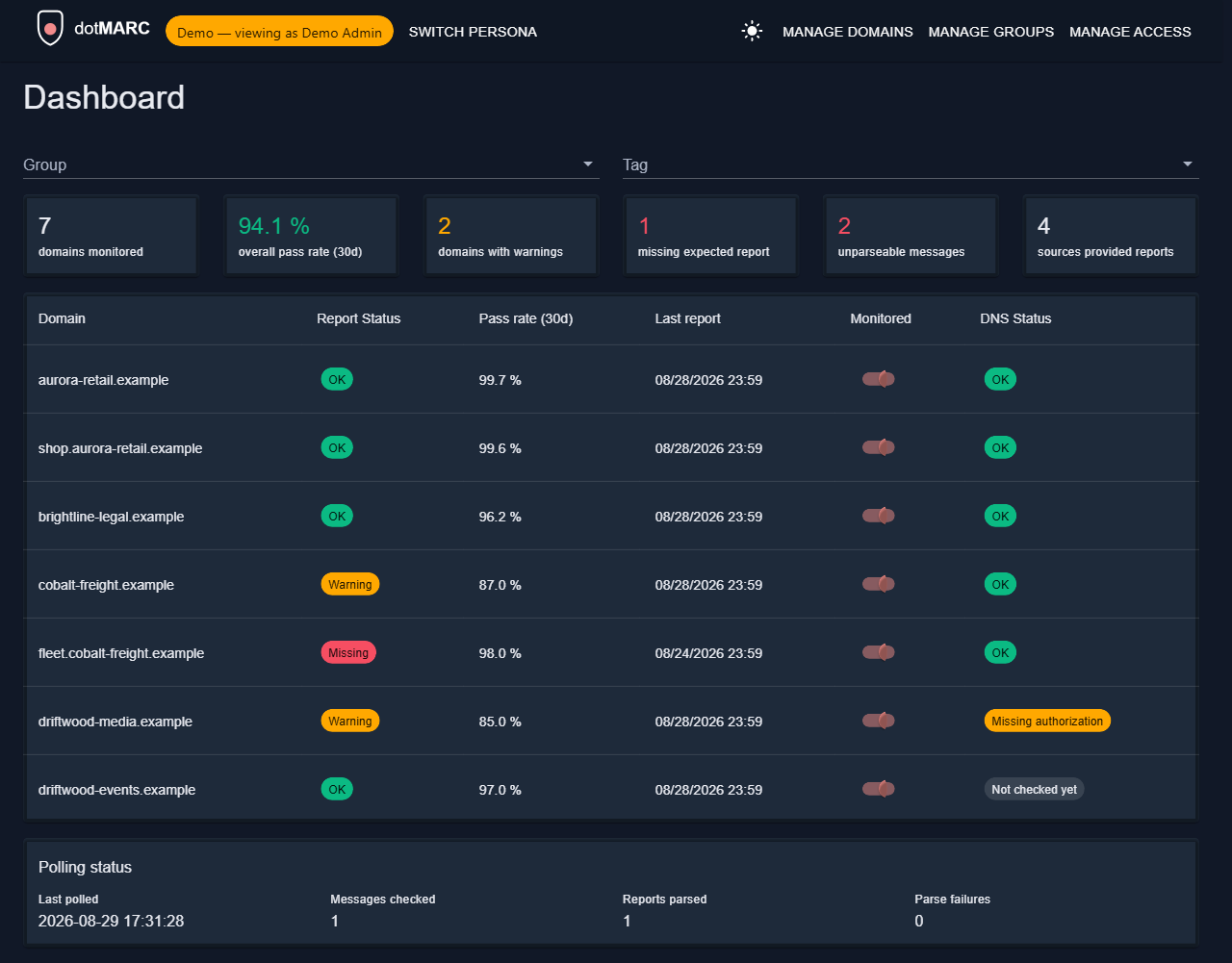
What you get
One mailbox, every domain
Every domain’s DMARC record points at one shared mailbox. dotMARC polls it, parses the aggregate reports without counting any twice, and files each under the right domain.
Every domain on one dashboard
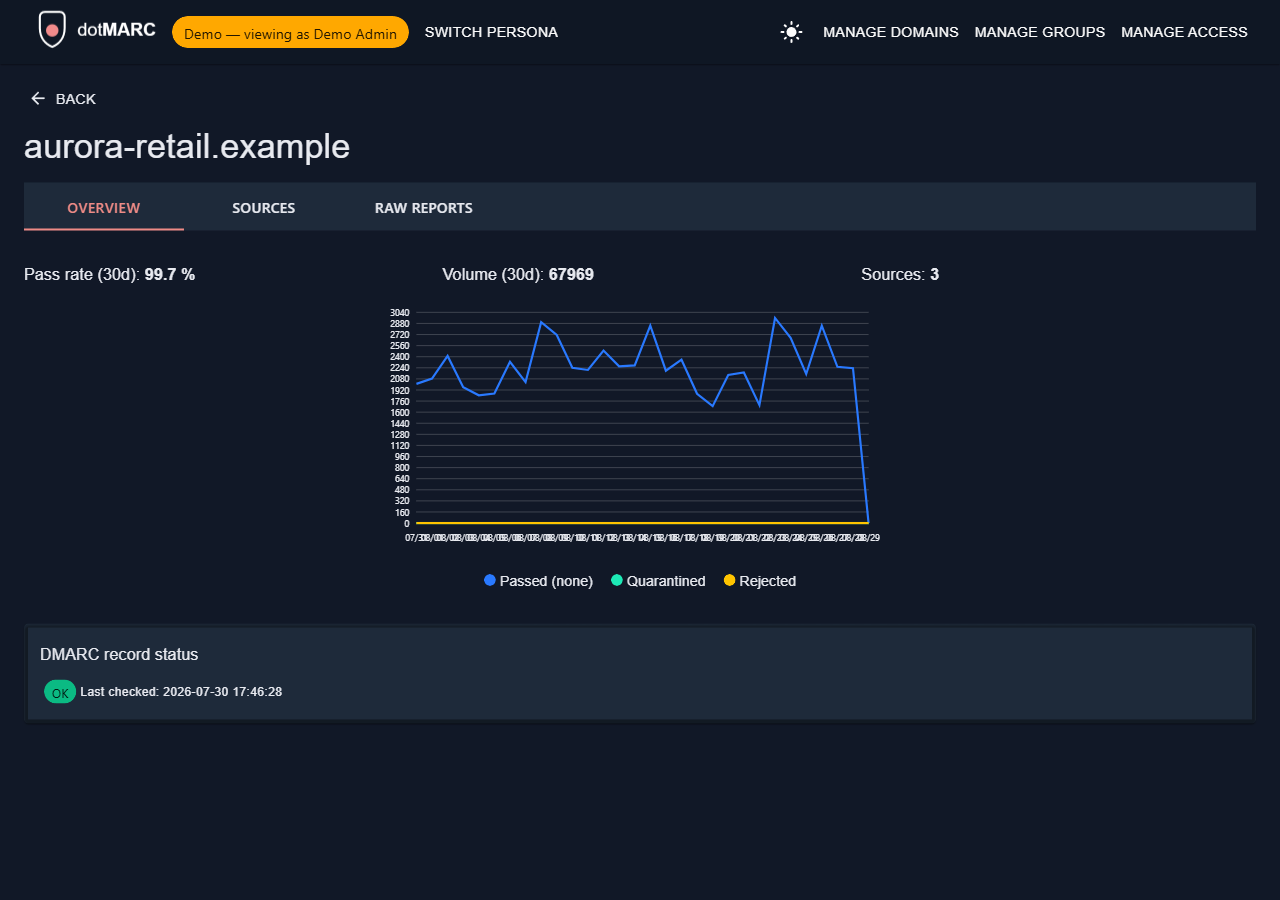
Pass and fail rates, sources and DNS record status for all your domains, filterable by Group and Tag. Live lookups confirm each DMARC record exists and points at the right mailbox.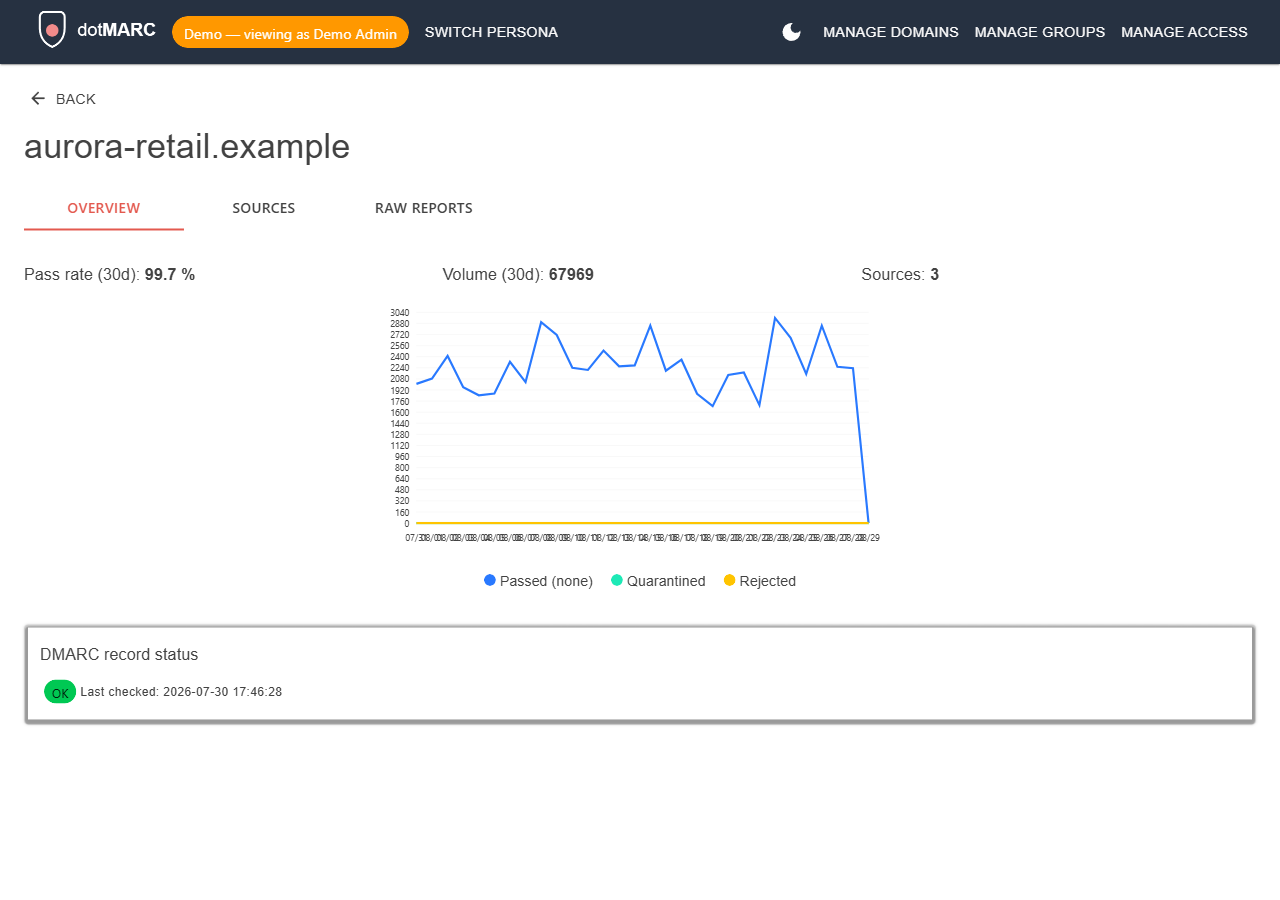
Access per client
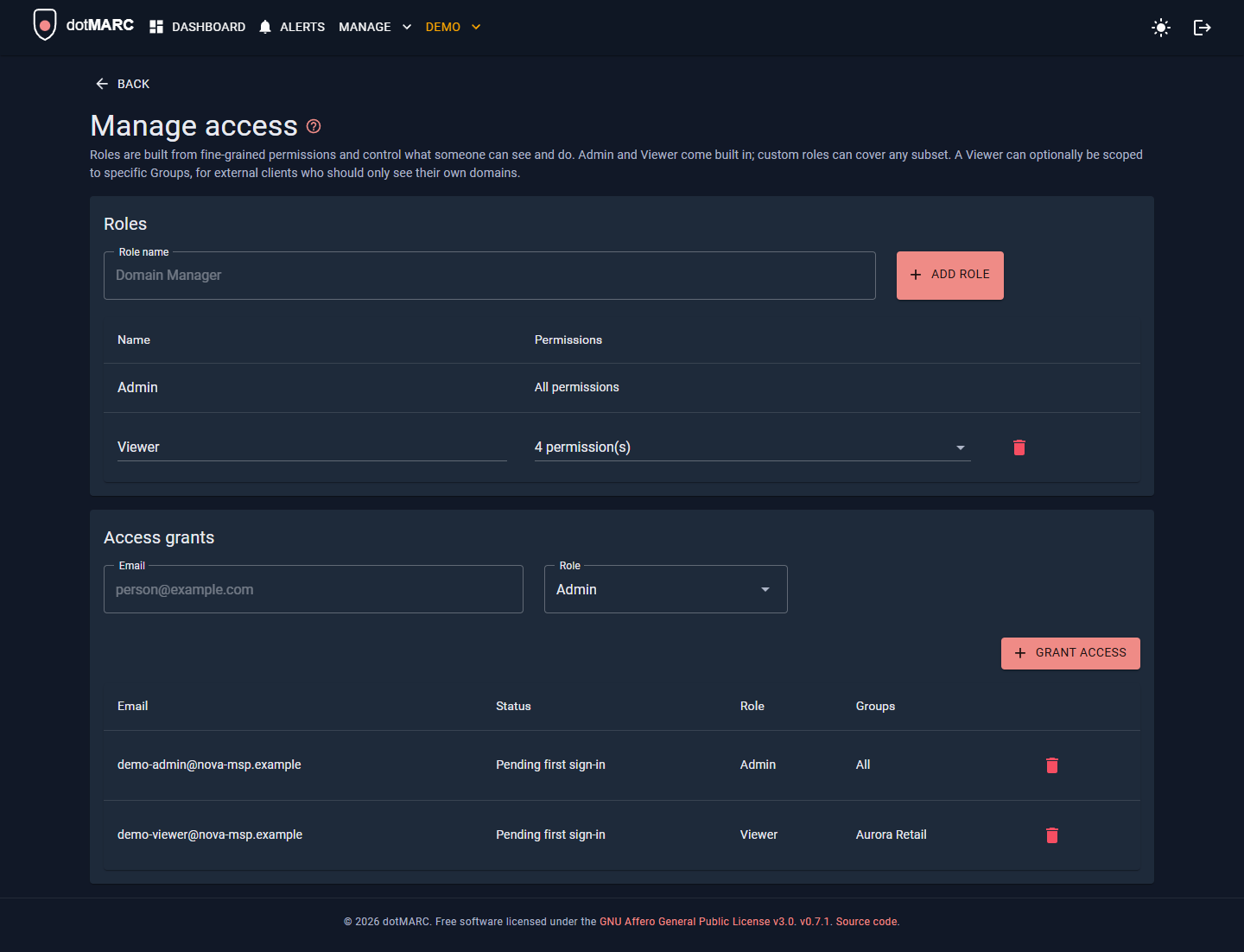
Give a client a Viewer role on just their own domains, not an all-or-nothing login. Admin and Viewer roles come built in.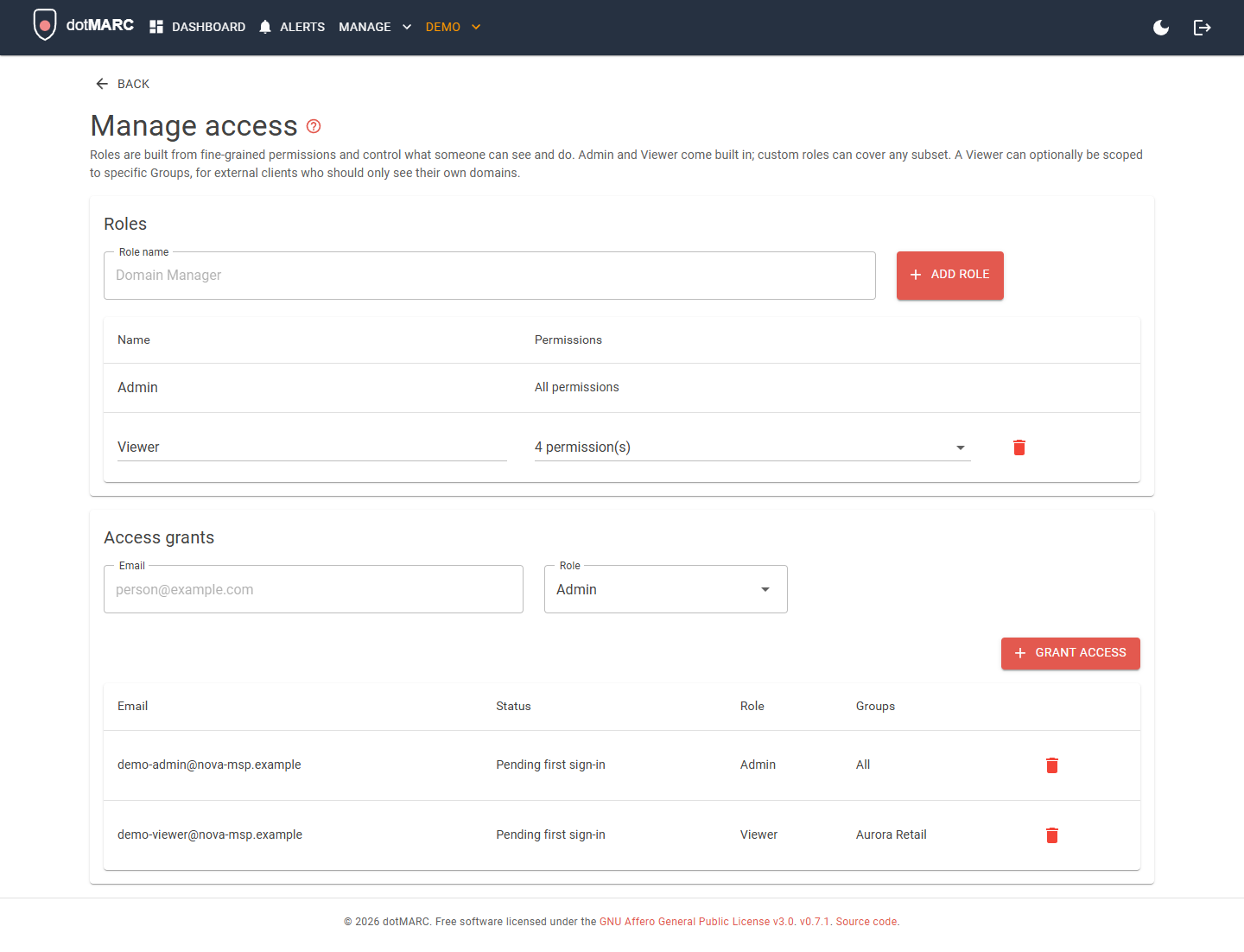
On your infrastructure
Runs with Docker Compose, or on Azure Container Apps, backed by PostgreSQL. Report data stays in your environment.
Why dotMARC exists
dotMARC started as the scripts we used internally to read DMARC reports for our clients’ domains. They worked, but they were ours alone. The hosted tools we looked at weren’t much better for an MSP: pricing that climbed with every domain we added, and feature lists that kept growing into things we never asked a DMARC tool to do. So we turned the scripts into an application that does one job.
dotMARC is free software under the AGPL-3.0, and it will stay that way. The source is on GitHub, and the Discord is the place to ask a question or suggest a change.
Run it yourself
Start with Docker Compose, or deploy the included Bicep template to Azure Container Apps. The docs cover both from start to finish.